Sex work is work: Sex workers want decriminalisation now
What does decriminalisation mean?
Full decriminalisation means removing all special laws that treat sex work differently from other jobs. This means getting rid of criminal laws, licensing systems, police powers and any other rules that single out sex workers, workplaces or clients.
Decriminalisation doesn’t mean no rules. Sex workers would follow the same workplace, planning, tax, health and criminal laws as everyone else. Full decriminalisation must include clear protections against discrimination and vilification for all sex workers.
Full decriminalisation of sex work is proven to:
- Promote sex workers’ safety, wellbeing and inclusion in society
- Reduce HIV transmission
- Improve access to justice
Decriminalisation of sex work in Australia
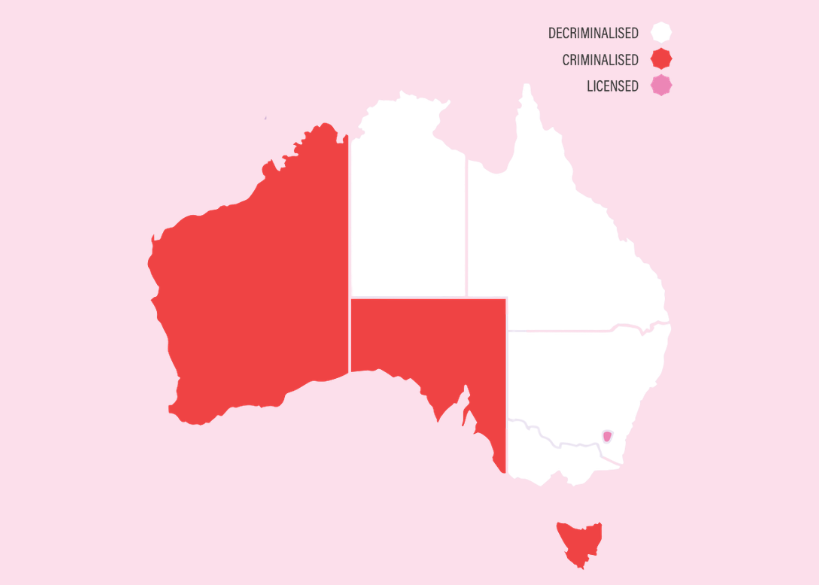
In Australia, only New South Wales, Victoria, the Northern Territory and Queensland have decriminalised sex work. However, New South Wales and Victoria have gaps regarding street based sex work.
Scarlet Alliance and our members continue to campaign for full decriminalisation across every state and territory in unceded Australia.
Why do we want decriminalisation?
Safety and justice
Criminal laws and stigma make sex workers afraid to report assault, robbery or violence. Police may arrest workers instead of helping. Laws targeting street-based sex workers don’t improve safety — they stop workers from screening clients, working together and building support networks.
Better health
Criminal laws and harsh policing create barriers to healthcare. International research shows harsh policing doubles the risk of HIV and STIs among sex workers. Mandatory testing or condom laws don’t work and aren’t needed — sex workers already prioritise health and safety.
Workers’ rights
Sex work should have the same fair workplace protections as any job. Workplace health and safety guidelines written by sex workers are the best way to support sex workers’ access to safe workplaces.
International support for decriminalisation comes from:
- UNAIDS (Joint United Nations Programme on HIV/AIDS)
- WHO (World Health Organization)
- UN Population Fund, UNDP and UN Working Group on Discrimination Against Women and Girls
- ILO (International Labour Organization)
- GAATW (Global Alliance Against Traffic in Women)
- Amnesty International
- Human Rights Watch
What are sex workers actually asking for?
- Full decriminalisation of sex work with clear protections against discrimination and villification for all sex workers.
- Sustainable, long-term and flexible funding for peer sex worker organisations to support sex workers, provide health and safety peer education, and empower our communities.
- Dedicated sex worker legal services to provide tailored legal assistance and support access to justice.
- Health, workers’ rights, and anti-violence organisations to openly support decriminalisation and commit to making their services better for sex workers.