Sex Work Law Reform - Scarlet Alliance

Skip to main content Skip to main navigation

Our new website is in testing. Spotted an error? Let us know!

Donate

Sex Work Law Reform

Sex work is work. When sex work is criminalised, we lack access to the basic legal protections every other worker takes for granted. Criminalisation makes it harder for sex workers to access healthcare, safety and justice. Scarlet Alliance advocates for the full decriminalisation of sex work. Full decriminalisation removes sex work-specific laws and lets us work under the same laws as everyone else.

Full decriminalisation means removing all sex work-specific criminal and licensing laws, and the police powers that come with them, for every sex worker.

Decriminalisation does not mean deregulation. Planning, tax, public health, workplace health and safety and fair work laws still apply, the same as they do for any other industry.

Full decriminalisation must include the introduction of civil anti-discrimination and anti-vilification protections, to address any discrimination that sex workers experience in areas like housing, education and employment. It must also include expungement of past sex work convictions and destruction of registration records that link our identities to our work.

Decriminalisation of sex work means…

  • the removal of all criminal and/or administrative penalties associated with sex work among consenting adults.
  • the recognition of sex work as a legitimate form of labor like any other.
  • aimed at promoting the health, safety, and human rights of sex workers.
  • centred on upholding sex workers’ agency and bodily autonomy.
  • the model favoured by the vast majority of sex worker-led organisations worldwide.
  • not an endorsement of exploitation, human trafficking, or the involvement of minors in the sex industry, which remain illegal.
  • not the absence of regulations; occupational health and safety standards which apply to other businesses and industries also apply to sex work.
  • not aimed at forcing or enticing individuals to enter sex work, but is about respecting the right to choose one’s occupation and to work in safe and healthy conditions.
  • not a partial approach. When any aspect of sex work is criminalised or penalised, sex workers remain subject to legal oppression.

Licensing (sometimes known as legalisation or registration) is a system where some forms of sex work are permitted, for example, sex work in ‘licensed’ or ‘registered’ brothels. Sex workers do not support licensing. These systems often exclude the majority of sex workers, pushing them to work illegally. Criminal laws and police powers punish workers who cannot comply.

Sex work is work, and we deserve respect, equality and the same rights and protections as all workers. Decriminalisation is fundamental to upholding sex workers’ right to participate fully in public life and achieve economic empowerment; enabling financial agency, security and independence.

Decriminalisation is the best legislative model for sex work. Sex workers support decriminalisation because:

  • Criminalisation is a barrier to healthcare.
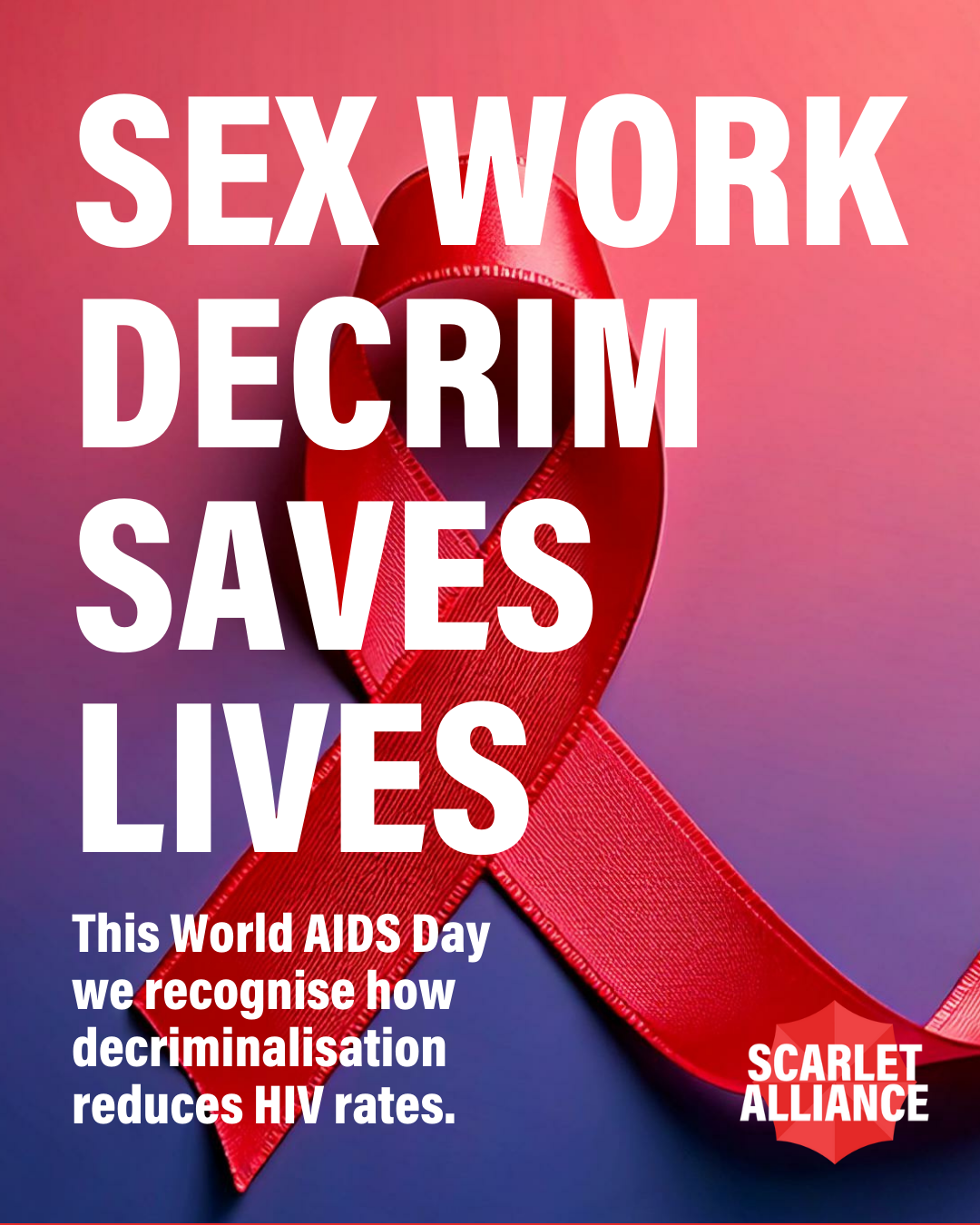
    Research shows repressive policing roughly doubles the risk of HIV and STIs among sex workers. Laws that mandate testing or condom use don’t improve health outcomes, they just assume we won’t protect ourselves and our clients unless forced to.
  • Criminalisation makes us less safe.
    Criminalising sex work makes us far less likely to report that violence, because reporting can mean prosecution instead of protection.
  • Sex work should come with the same workplace protections as any other job.
    Access to workplace health and safety regulations, the Fair Work Ombudsman and industrial rights mechanisms. Decriminalisation, combined with safe migration pathways and funding for peer-led sex worker organisations, reduces sex workers’ vulnerability to trafficking and exploitation.

…but I thought sex work was ‘legal’ in Australia?

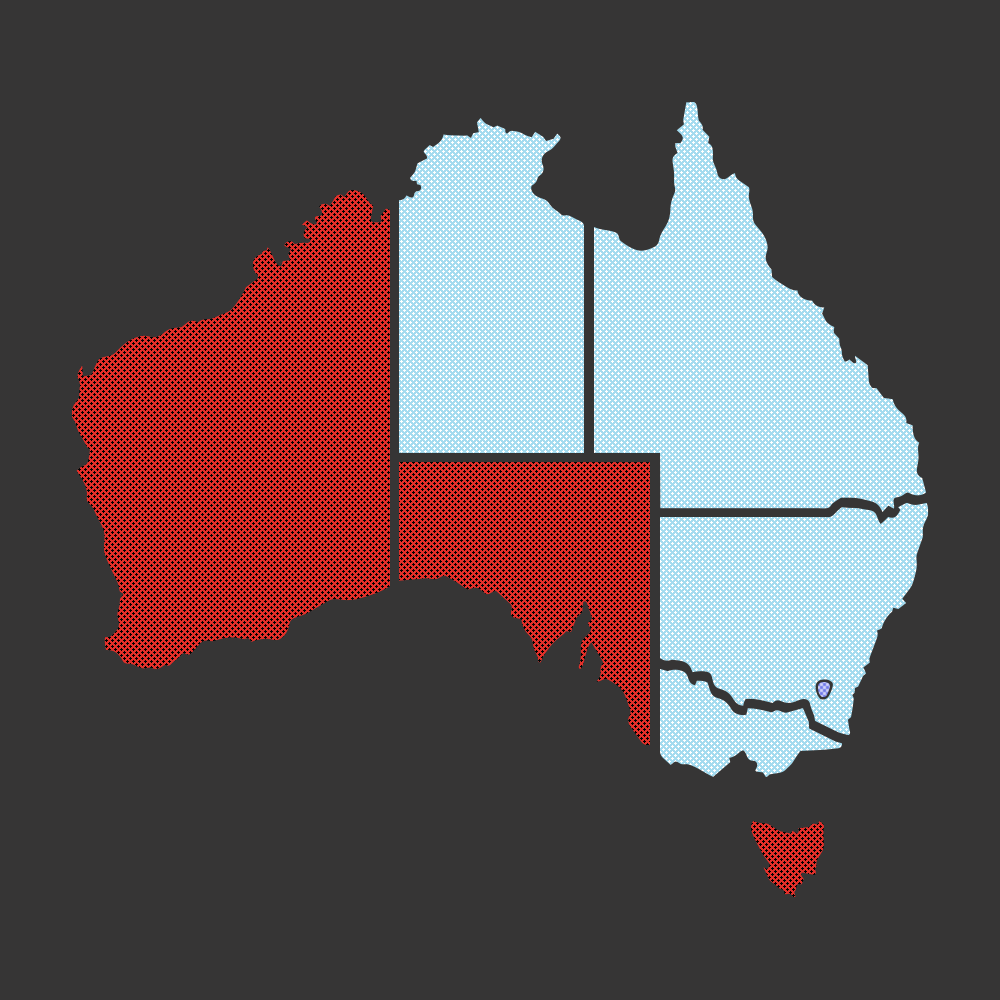
Sex work laws are different in each state and territory. Sex work is decriminalised in New South Wales, Victoria, the Northern Territory and Queensland. However, NSW and Victoria both retain some criminal laws around street-based sex work.

Sex workers in South Australia, Western Australia, Tasmania and the Australian Capital Territory are still working under criminalisation or licensing. Scarlet Alliance and our members will keep advocating to ensure that sex work is fully decriminalised in every state and territory.

WA Western Australia

Sex work is both criminalised and operates openly.

NT Northern Territory

Sex work is decriminalised.

QLD Queensland

Sex work is decriminalised.

SA South Australia

Sex work is mostly criminalised.

NSW New South Wales

Sex work is mostly decriminalised.

ACT Australian Capital Territory

Sex work is licensed.

VIC Victoria

Sex work is mostly decriminalised.

TAS Tasmania

Sex work is partially criminalised.

Keep the conversation going.

Follow us on Instagram

We regularly share sex worker-led information and advocacy on decriminalisation, sex work laws and our rights at work. Explore our posts for community perspectives, mythbusting and updates on the fight for full decriminalisation of sex work across Australia.

Keep the conversation going.

Follow us on Instagram

We regularly share sex worker-led information and advocacy on decriminalisation, sex work laws and our rights at work. Explore our posts for community perspectives, mythbusting and updates on the fight for full decriminalisation of sex work across Australia.

From our library.

Explore more of our research, submissions and advocacy on sex work law reform, decriminalisation and the impacts of criminalisation and licensing on sex workers’ rights, health and safety across Australia and internationally.

Submission on the Prostitution (Offences and Support) (Scotland) Bill
Sex work law reform, Submissions
5 September 2025

Submission on the Prostitution (Offences and Support) (Scotland) Bill

Read more about Submission on the Prostitution (Offences and Support) (Scotland) Bill
Scarlet Alliance and Vixen Collective Joint Submission to the Review into the Decriminalisation of Sex Work
Sex work law reform, Submissions
20 July 2020

Scarlet Alliance and Vixen Collective Joint Submission to the Review into the Decriminalisation of Sex Work

Read more about Scarlet Alliance and Vixen Collective Joint Submission to the Review into the Decriminalisation of Sex Work
Submission on Fairer and Safer Sex Work Regulation in the ACT
Sex work law reform, Submissions
1 April 2026

Submission on Fairer and Safer Sex Work Regulation in the ACT

Read more about Submission on Fairer and Safer Sex Work Regulation in the ACT
Submission on the Criminal Code (Decriminalising Sex Work) and Other legislation Amendment Bill 2024 (QLD)
Sex work law reform, Submissions
8 March 2024

Submission on the Criminal Code (Decriminalising Sex Work) and Other legislation Amendment Bill 2024 (QLD)

Read more about Submission on the Criminal Code (Decriminalising Sex Work) and Other legislation Amendment Bill 2024 (QLD)
1 / 4